Pursuing Theology, Ethics, and Spirituality that are Christlike: Christocentric, Healing, Reconciling, Incarnational, Sacramental, Trinitarian, Liberating, Inspired, Katholic, and Embracing. And other random stuff.
2026-10-22
Peculiar Assumptions of Matter and Mind
2026-03-06
Panentheism: Why matter Matters
In our modern age, we are often haunted by a "disenchanted" world: A cosmos where matter is viewed as mere mechanical "stuff" and God is reimagined as a distant watchmaker who has long since retreated from his creation. This theological poverty, which often drifts into a "Moralistic Therapeutic Deism," leaves many feeling spiritually homeless in a universe that seems indifferent to our existence. However, the ancient Christian worldview offers a far more vibrant and "thick" description of reality. By returning to the conviction that the Infinite Creator is not just "out there" but "in here," upholding every atom by the power of the Spirit, we find ourselves standing on holy ground. As the Apostle Paul reminded the philosophers of Athens, God is the one in whom "we live and move and have our being" (Acts 17:28).
The thoughts presented here are an invitation to move beyond the shallow waters of modern nominalism and dive into the deep pool of Panentheism, Theosis, and Sacraments. We will explore how the ancient Church understood salvation not as a legal transaction in a heavenly courtroom, but as a transfiguring union with God: A process where we become, as the Apostle Peter wrote, "partakers of the divine nature" (2 Peter 1:4). We will see how the physical world, far from being a distraction from the spiritual life, is actually the primary laboratory of God's presence, where humble elements like bread, wine, and water become the conduits of Divine energy. Drawing on the insights of thinkers like St. Athanasius, who famously argued that "God became human so that humans might become divine", we find that matter is not a prison for the soul but a "theophany", a visible showing of God’s invisible glory.
As we navigate the crucial distinction between a God who is separate from creation and a God who is distinct within it, we begin to see that the physical universe is the perfect vessel for Divine self-expression. Matter matters because it is the medium through which the infinite Creator relates to the finite creature, a truth that reaches its breathtaking climax in the person of Jesus Christ. For the curious mind seeking a faith that is both intellectually rigorous and deeply embodied, it becomes evident that panentheism is a logical corollary which naturally flows from the Trinity and Incarnation.
2026-01-22
Does God's Love serve Power, or Power serve Love?
Many of us who believe in God would list a similar set of attributes of what make God an Ultimate Reality worthy of the title "God". We may say God is eternal, non-material, all powerful, all knowing, and all good. God stands apart from all other beings as the Source of Being itself, the Creator of all things that are not Godself. All good and true. But is it possible for two people to hold all these views in common, and yet have diametrically opposed views of how God acts, and why God treats us the way God does?
Yes. How we order and prioritize God's attributes can result in a radically different vision of God. We don't tend to talk about this much, and we assume that all Christians or all Theists worship the same God. But could it be the case that, actually, we worship totally different images of the same God? Nothing brings out this divide better than the question: Does God's Love serve Power, or Power serve Love?
2024-03-17
You are a Theophany
2023-12-02
The Panentheism of Creation in Christ
2023-10-15
The Complexity of Love's Simplicity
Divine Simplicity is simply too simple
2023-06-28
The Many Loves of the Love of God
When we speak of the Love of God, or praise God for God's Loving-Kindness, we are remembering that above all, God is Love. But this Love is not merely the feeling we tend to associate with liking something a great deal, such as when we say "I love this coffee" or "I love that activity". Rather, we mean that God's Love is something deep and active, constantly working for the abundant life and flourishing of those God loves. In short, it is Love operative in sacrificial acts of kindness: Loving Kindness. Many Scriptural words and concepts fill out what this Divine Loving-Kindness means.
2023-01-01
Scriptures on experiencing Divine Light
I figured I would start the year with a little Bible study. Here are some things that Scripture tells us about Divine Light and how we may experience and embody Light in our lives. The following is a Scriptural outline on how we can experience Divine Light, through Jesus Christ, but the power of God's Spirit.
2022-07-27
The Metaphysics of Materialism
2022-07-15
Why God cannot be evil
2022-06-11
Is Love stronger than hate?
2021-12-30
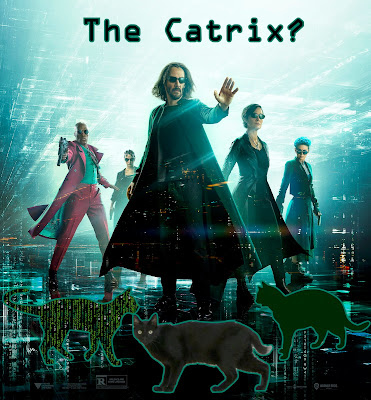
Resurrecting the Matrix: An Ideological Review
2021-03-08
God is...
2021-01-16
A Provocation on the Constant of Change
2020-05-16
Theological Topology: Placing the Trinity in Reality
At first glance, topology and theology have nothing to do with each other. Theology, on one hand, is "the rational discussion of God" (from the Greek words "theos" meaning God, and "logia" meaning study of, or reasoned discourse about). Topology, on the other hand, is the study of geometric properties and spatial relations between various kinds of objects in space, and the way in which constituent parts are interrelated or arranged. So, theology seems to deal with an Ultimate Reality beyond our world, while topology deals with spatial relations within our world. Nothing could be more different. It is like comparing apples to oranges, or Infinite Being to mere beings.
2020-04-03
When Words Fail
How both Theistic and Nontheistic language fails to describe Ultimate Reality
In the constant back and forth between Theists and Nontheists, one of the frequent criticisms hurled from both sides regards the problem of language. Both sides claim that that other side slides into nonsensical or tautological language that fails to say anything about Reality. At some point, each side gets to ideas that are so foundational, so axiological, to their interpretive framework, that all they can say is "it is what it is".
2019-05-17
Visions of Ultimate Reality
The goal of our spiritual journey is to explore what is True, pursue what is Good, and practice what is Beautiful. And this journey begins with the question: What is Truth? Some say that Truth resides in a Holy Book of some sort, or a set of infallible statements about Reality. Some claim Truth is found in an inner experience, while others say it is found in evidence gathered from our senses. And then we find great spiritual teachers, such as Krishna who says “no Truth is superior to me”, or Jesus who says “I am the Way, the Truth, and the Life”. Despite all of the apparent differences, these visions of Truth share some commonalities: They assume we are part of a greater Reality. And we come to experience Reality, as it really is, through many ways. These ways include books, and our senses, and inner experiences, and relationships with others. Through these ways we find Truth when our inner self conforms to what is really Real, and we are brought into harmony with Ultimate Reality. And in history there are enlightened persons-- like Krishna and Buddha and Jesus-- who are so filled with Ultimate Reality that they claim to be living embodiments of Truth.
So what is the greater Reality that we need to conform ourselves to, so we also can embody Truth? What is really Real in the world we experience? What is the Ultimate Reality which is beyond, or within, or underneath, the apparent reality we experience every day?
2019-01-28
In the Divine Symphony: Why I think God is Real
In the school where I am chaplain, two of the skills we try to teach students are: First, how to build an evidence-based argument, and second, how to present the view you hold without demeaning or belittling those who disagree. This is especially true with controversial subjects that people hold strong opinions on.
Since we give feedback about this so often, to so many of our students, I thought I would create an example of a controversial, evidence-based argument, which was presented in a way that sought to include even those who disagree with my conclusion. And voila: This sermon was born. The texts read before this sermon included: Psalm 19.1-9; Acts 17.27-28; Romans 1.19-20; 1John 4.7-16.
As we continue our journey through Epiphany, the season when Christ's Light shines on ALL kids of people, through ALL kinds of experiences, I wanted to challenge you a little today about HOW we see God's Light. And this challenge comes from a question I frequently get asked, and that I was asked again last week. The question goes something like this:
"Fr. Nate, you seem like a smart guy. How come you still believe in God?"