Pursuing Theology, Ethics, and Spirituality that are Christlike: Christocentric, Healing, Reconciling, Incarnational, Sacramental, Trinitarian, Liberating, Inspired, Katholic, and Embracing. And other random stuff.
2026-04-04
Not the Droids you are looking for: Beyond A.I. hype
2025-02-18
Three Strands of Classical Liberalism
Recently, I have been part of a book study of Patrick J. Deneen’s “Why Liberalism Failed”. Three conversations into Deneen and I find myself continually frustrated by his loose use of the word Liberalism to mean anything and everything corrosive in contemporary culture, ranging from radical libertarianism to deconstructive relativism to unrestrained consumer capitalism. I also find he is quick to demonize liberalism– or rather his version of “liberalism”-- while very reticent to acknowledge the good liberalism has brought, which has never appeared en masse in any large society on earth. Goods such as universal suffrage, modern science, sustained engagement across radically different cultures, and civil rights for all kinds of people historically excluded or diminished across cultures (women, POC, LGBTQ, disabled, etc.). When I decide where to eat at night, or where to work on the weekday, or where to worship on the weekend, I have the choice between dozens of cultures and thousands of different opportunities, all within 15 minutes of my house. And that doesn’t happen without Liberalism. So, in order to balance the ledger, I would like to present my corrective to Deneen, in what I am calling the three strands of Classical Liberalism.
2023-03-16
The Body of Christ needs a Left and a Right
This was written in 2007 for a class I was taking on the Church and Social Change. I have never posted it online because I received negative feedback on the thesis because it did not adhere closely enough to established political options available in our society (the subtext seemed to be that I failed to “take a side” in the way my professor wanted me to). Re-reading it in light of what has happened in our country in the last 15 years, it seems to me that this holds insights I would like to share. Most importantly the core theme and metaphor of the paper: We are the Body of Christ, and all functioning bodies have a right and a left side. And in the Church and the Body Politic of Society, we need to realize that we need each other from all sides, and we need to stop demonizing those who are not in “our” side of the Body. As the original subtitle of this paper stated: "Why the Church needs to get beyond Polemics to resist the rise of Global Corporate Consumerism".
2022-06-20
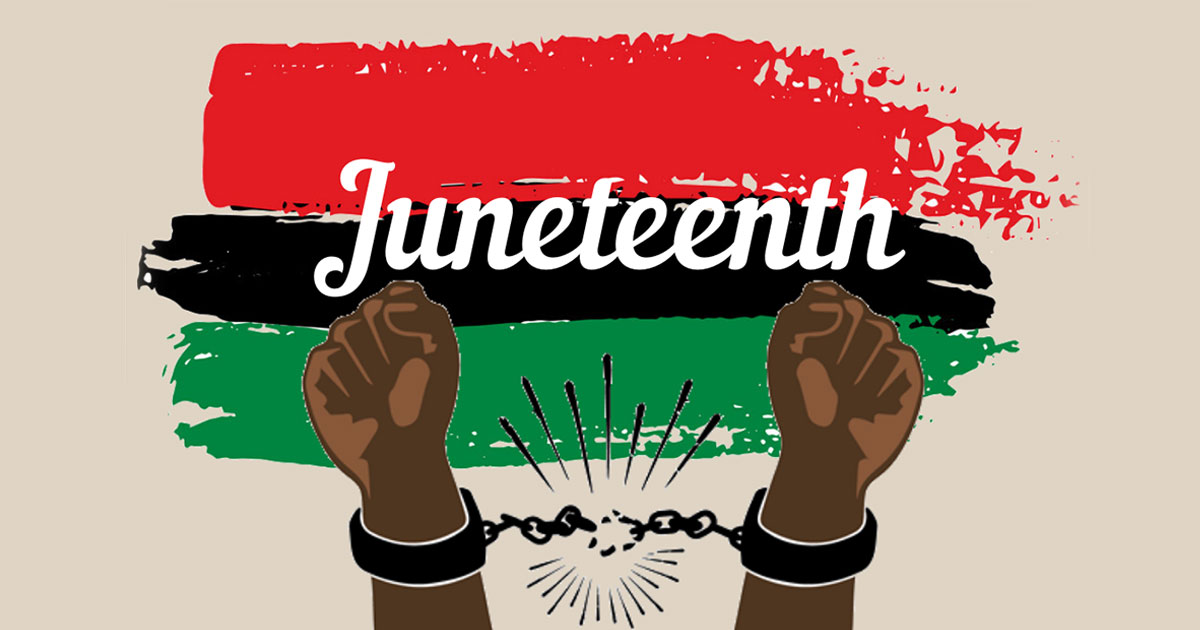
A Prayer for Juneteenth
2021-12-30
Resurrecting the Matrix: An Ideological Review
2021-05-10
Diversity, Inclusion, Equity, and Episcopal Identity
2020-11-17
Durkheim’s Ghost
2020-09-13
Is a Politics of Life possible in a culture of death?
2020-08-16
A Squandered Jubilee
2020-06-09
Twin Pandemics
2020-05-01
The Crumbling Metaphysics of Mammon
Despite radically different starting points, both the secular and religious person are duty bound, by the very fundamentals of their worldview, to oppose the absolute claims of the Market Economy to rule the affairs of humanity. Furthermore, they are even more duty bound to harness the powers of the economy to bring abundant life to humans. For money is created to serve humans, and not humans to serve money. The wealth of a nation is the health of its people, and the health of an economy is the health and well-being of the people served by that economy. There is no other metric that is meaningful or worthwhile. Is the economy increasing the life and health and wellbeing of those who live within it? Then it is a good economy that needs to be strengthened. Is the economy decreasing the life and health and wellbeing of those who live within it? Then it is a bad economy that needs to be reformed.
2020-03-23
Race Cars, Pandemics, and Economics
If we want to have a global interconnected society that can survive shocks like pandemics, we are learning that all people everywhere need basic access to nourishment, healthcare, and communications. Without it, every institution, from schools to businesses to entire economies, grinds to a halt.
2020-03-19
Divine Justice, Quarantine, and Healing
During this time of pandemic, social distancing, and quarantine, my sacred reading today was from the First letter of John (read it all here). One text in particular deals with Divine Justice, and can really reframe how with think of Justice in an age of global contagion:
"If we confess our sins, [Christ] is faithful and just, and will forgive us our sins, and purify us from all injustice." (1 John 1.9)
2020-02-28
Human rights or God’s rights?
We get tied up in knots about whether healthcare is a human right or an earned privilege. We argue about whether food is a human right or an earned privilege. We debate whether education is a human right or an earned privilege. For those of us who believe in God, as revealed in Jesus of Nazareth, there is a way out of this conundrum.
2019-12-18
Consumerism, Yoga, and Meditation
While I see immense value in Eastern spiritual practices and have incorporated several into my journey with Christ, my problem with Consumerized versions of Eastern Spirituality is threefold:
2019-04-18
Is Consumerism to blame for everything?
After a recent blog post, a friend called me out for anti-Capitalism, and asked me "Is there anything you do not blame on Consumerism or Capitalism?" The really short answer is: No. I don't blame everything bad on Consumerism. First of all, I think there is a place in society for Markets and Capitalist business. So, I am not against a pro-social form of Market economy. Second, I actually blame everything on Sin: The infection of human nature that manifests itself in selfish and predatory behavior to attain short-term material goals, at the expense of long term personal wellbeing and societal health. But saying everything is the result of sin can be a really easy way to avoid responsibility to change: If there is a universal condition called sin that infects and affects us all, who am I to change it? Who are we? We are better off being fatalistic, giving in, and going along.
But when we name how sin functions in a certain system, and how that system acts to focus and amplify the symptoms of sin, then we can devise counter-measures to deal with sin. We can be aware of the strategies and processes the system uses to dehumanize us and disconnect us from meaning and value in life, as God's grace empowers us and sensitizes us to those strategies and processes. So, at this point in world history, we have one over-arching ideological and socio-economic system which holds our entire planet in its thrall: Global Corporate Consumerism. So let's talk about that...
2019-04-13
Religion is in retreat! All hail the new gods!
Recently a spate of articles have come out showing, yet again, the rise of “The Nones”, who have no religious affiliation, while traditional religions continue to decline. While there is truth to this trend-- predominantly white Christian expressions in the USA are in decline in terms of numbers-- this is not the whole story. For a better insight into the polling data, I would look at Pew Religion. They offer some explanations to go along with the current American data, which is reflective of the European decline of religion last century, but not reflective of the growth of religion in Asia, Africa, and much of South America. However, there is no definitive explanation of why the decline in some places, and rise in others. So, let's take a look at one theory...
2019-04-04
The Rise of Homo Consumerensis
I’ve been pondering a feeling I have but cannot quite put into precise words. But it seems like our culture has less capacity, and desire, to think about and discuss ideas. Everything has turned into a politics of the putdown, and diatribes of denigration. In the late 90's to early 00's, I remember having lively discussions online and in real life about theological and philosophical topics with regular folks: From predestination, to the nature of God, to acceptance of LGBT persons, to capital punishment, to what goes on in the Sacrament.
2019-02-14
Monarchic Anarchist Theocratic Pluralist Entrepreneurial Socialism
I love "world building" science fiction: The kind where a big sprawling universe is created which includes all kinds of details about the history, culture, sociology, religion, economics, and politics of future society. One frequent form of future society that particularly interests me is a kind of "technological monarchy" which you can find in works such as "The Mote in God's Eye" and Peter Hamilton's "The Night's Dawn Trilogy". This is not a Star Trek style galactic republic, nor a Star Wars style Evil Empire. Rather, it is a form of society that combines monarchy (and often a "State Church") with forms of representative government, with advanced technology, with religious and cultural pluralism, with free market economics, with various socialist policies, to create something really different. Could anything like this ever exist? Could there be a coherent ideology to hold such a system together? Let's see if we can develop a thought experiment to put together a sympathetic worldview which might make this possible.