Pursuing Theology, Ethics, and Spirituality that are Christlike: Christocentric, Healing, Reconciling, Incarnational, Sacramental, Trinitarian, Liberating, Inspired, Katholic, and Embracing. And other random stuff.
2026-06-27
Three Centuries of Masculinity in Crisis
2026-06-20
Taking Pride in the Families God knits together
As is often the case during Pride month, the hornet's nest of culture war rhetoric is stirred up once again, as our major media outlets stoke us into unending debate over whether LGBTQ+ love is the same kind of love found in heterosexual relationships, and whether LGBTQ+ families should be accepted as families in the fullest sense. I have dealt many times with the Scriptural questions surrounding these issues, and for a half a century the Episcopal Church has proclaimed LGBTQ+ persons to be fully beloved and fully accepted siblings in God's vast Family.
In 1976, the Episcopal General Convention declared that “homosexual persons are children of God who have a full and equal claim with all other persons upon the love, acceptance, and pastoral concern and care of the Church” (1976-A069), and that they “are entitled to equal protection of the laws with all other citizens” (1976-A071). In 2012 we created liturgical resources for the celebration of same-sex marriage. Or as we like to call it: Marriage. No qualifiers. Yet, as the same debates and cliches get brought up over and over and over again over the nature of sexuality and marriage and family, it can often seem like we are missing the point in both striking and subtle ways. With all the fear and hate and mockery and dehumanization that is evident in the persecutors and even in the persecuted, perhaps we have lost our Way in following Jesus. Perhaps there is a different Way to frame the reasons why we embrace all persons and families in God's vast Family.
2021-11-10
Proverbs 31 and the Noble Spouse
2017-04-14
Mary Magdalene versus the Patriarchy

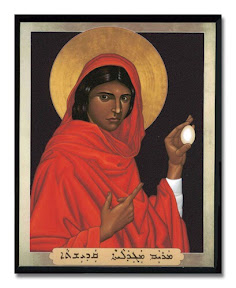
So the controversy over who Mary Magdalene was has jumped out of the pulpit and lecture hall, and into the Washington Post. For some on the "Right", Mary is a lowly prostitute who Jesus cast demons out of and saved to be one of the "little women" in the Gospel story. For others on the "Left", Mary is one of the leading Apostles, the patron saint of feminine empowerment, who was unjustly and unfortunately silenced by the growing patriarchy of the early Church. Both sides of the debate paint this as an either-or. Either Mary is a barely redeemable ex-whore, or she is an unjustly maligned Apostle. But perhaps the battle lines have been drawn based upon the logical fallacy of the excluded middle.
2007-05-13
Subverting Submission: A Rhetorical Analysis of Ephesians 5
The other side, convinced of the much more probable hypothesis that Paul indeed did write it- or if he did not, one of his close disciples did- rightfully side with the catholic Church and accept it as canonical. They believe that God is, in fact, speaking through it to the Church today, and we need to listen to it as a foundational document for the Church. But, they read it in such a way that it supports something close to a ancient Jewish "second class status" for women.
One side wrongly approaches Biblical authenticity, but rightly discerns the Gospel message of liberation. The other side rightly approaches Biblical authenticity, but wrongly discerns the message. What shall we do?
2006-01-24
Needle Pricks, Crocodile Tears, and Divine Providence
2005-08-02
An Affirmation of Women's Ordination
I will try to explain the basic reasons for, and against, women's ordination. Before I attempt this, I want to make three admissions: First, I believe in women's ordination and my writing will reflect this. I will try to be fair, but I am not objective. Second, I will probably over-simplify things. This is a vast subject with many books written on it. Third, I have friends who are against women's ordination, and I once was against it myself. I respect the position of anyone who honestly opposes women's ordination for the sake of Christ (though I disagree with them). If you are in a Church that opposes women as priests, please ask your pastor for his view on the matter. With that said, let us talk about the four most common objections to women's ordination: